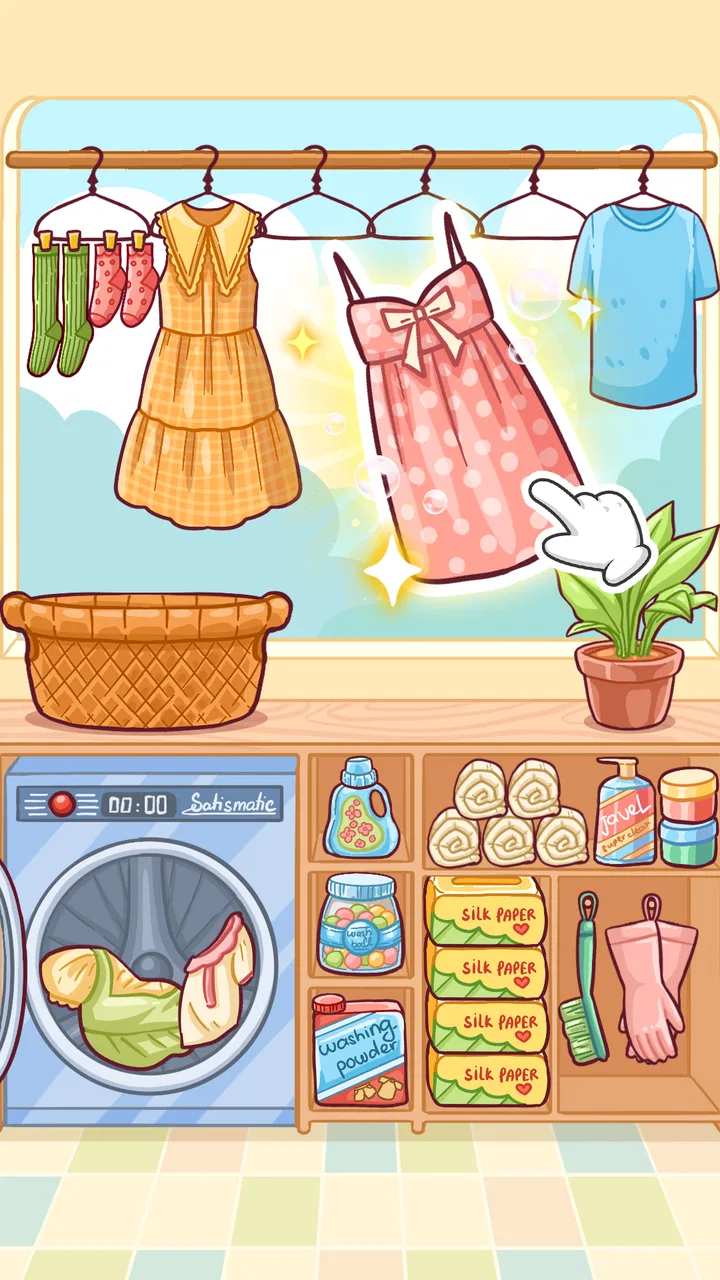
Tidy Puzzle: Perfect Satisfy
- 3.7
- Rating
- 5.00M
- Installs
- Free
- Price

 Analysis by App-foxy
I spent time with Tidy Puzzle: Perfect Satisfy as a light puzzle game built around arranging and cleaning up visual scenes. Its appeal is easy to understand: instead of asking me to solve a complicated riddle, it gives me a small space that feels unfinished and lets me turn disorder into something neat. That simple loop makes it a comfortable choice when I want a few quiet minutes rather than an intense challenge.
The game comes from FALCON GAME and sits in the puzzle category. It is free to install, suitable for Everyone, and runs on Android 7.0 or later. The current version is 1.3.9, while the game was released on April 16, 2025. Its average rating is 3.9 from around 5.5 thousand ratings, and it has passed 1 million installs. Those figures suggest a sizable audience, although the rating also tells me to approach it as a pleasant casual game rather than a flawless experience.
How the tidy-puzzle idea feels in everyday play
The central pleasure is visual order. I look at a scene, identify what seems out of place, and work through the available objects until the arrangement feels complete. That gives each small session a clear beginning and ending. I do not need to remember a complicated story or build a long-term strategy before enjoying it.
You May Also Like

 Blood Strike: 2.5 Anniversary
Blood Strike’s Loadouts Turn Every Drop Into a Tactical Gamble
A close look at Blood Strike’s custom loadouts: how fast access to signature weapons reshapes its battle royale rhythm, rewards preparation, and narrows the gap between fights.

 Pandora - Music & Podcasts
Pandora’s Music Is Easy to Start, but Harder to Recover
Pandora’s strength is its low-effort path from a seed to a station. Its weak spot is how much confidence it asks you to place in connection, setup, and quiet recovery.

 8 Ball Pool
 Is Built on Rivalries, Rematches, and Routine
A close look at the rivalries, rematches, shared routines, and unanswered safety questions that turn a quick pool match into a persistent mobile community.

 Samsung Music
’s Quiet Strength Is Playing What You Already Own
Its reach comes less from spectacle than from dependable access to a personal library. That simplicity is both the app’s strongest retention engine and its ceiling.

 AccuWeather: Weather Radar
AccuWeather Review: A Quick, Clear Forecast for Everyday Decisions
For everyday plans, the best forecast is the one you can understand quickly. AccuWeather makes rain timing, radar, and local conditions easy to act on, with a few trade-offs.

 Hill Climb Racing
Why Hill Climb Racing Still Turns Crashes Into One More Run
A tiny car, a bumpy hill and one more upgrade: Hill Climb Racing keeps resurfacing because its simple chaos makes every near-miss feel personal.
More From Our News Desk



That makes it particularly suitable for a short break. I can imagine opening it while waiting for an appointment, winding down after work, or taking a brief pause between chores. The cleaning-and-arranging theme also gives the puzzles a softer mood than games based on combat, timers, or constant failure. The satisfaction comes from completion and presentation, not from beating an opponent.
Still, “relaxing” does not mean every moment is effortless. A tidy puzzle can become surprisingly demanding when several objects appear to fit the same space or when the intended order is not immediately obvious. I found that the best approach was to scan the whole scene first instead of moving the first item that caught my eye. Looking for obvious pairs, empty spaces, and objects that clearly belong together reduced unnecessary trial and error.
A useful way to approach difficult scenes
My most practical tip is to treat each level like a sorting task. I first separate objects mentally into three groups: items that obviously belong in a visible location, items whose position is uncertain, and items that may only make sense after another piece has been moved. This prevents me from repeatedly disturbing the same area and helps reveal the intended structure.
Another useful habit is to pause after every successful placement. In many tidy-style puzzles, one correct action changes what is visible or makes the next choice easier. Rushing through the scene can make it feel more confusing than it really is. The game works best when I use the visual feedback as information rather than tapping randomly.
This is also where the game differs from a standard match-three puzzle. Match-three games usually reward pattern recognition under a repeating rule, while this experience focuses more on spatial judgment and visual completion. If I want a quick score chase, a traditional match-three title may be more energetic. If I want to make a messy picture feel orderly, this game has the more appropriate rhythm.
Where the relaxing formula can lose its charm
The same simplicity that makes the game approachable can limit its long-term appeal. Players who need deep logic, elaborate planning, or a strong narrative may find the experience too gentle. The satisfaction is immediate and visual, but it may not provide the intellectual variety of a larger puzzle collection.
I also would not choose it as my main game if I wanted competitive pressure. There is no reason in the basic concept to expect the same tension as a ranked puzzle game or a timed leaderboard challenge. This is better understood as a personal completion activity. That distinction matters because someone searching for measurable competition could mistake a calm tidy game for a more demanding brain-training product.
Spending, progress, and the pressure to continue
The game is free, but it includes in-app purchases ranging from $1.99 to $39.99 per item. That is the key spending detail I would want to know before installing it. A free download can be perfectly reasonable for casual play, yet the presence of purchases means I would still pay attention to any prompts that appear during progress, especially if I am handing the phone to a child.
I do not treat the existence of purchases as proof that the game is unfair. The purchase range alone does not establish how often offers appear, what each item provides, or whether a player can complete the puzzles without spending. Those details should not be guessed. My practical advice is simpler: start without buying anything, learn how the normal progression feels, and decide whether the free experience is already enjoyable enough.
That approach is especially sensible here because the core attraction is the act of tidying. If I enjoy the basic sorting and arranging loop, I can judge the game on that experience rather than assuming a purchase is necessary to make it worthwhile. If I immediately feel pushed to spend before I can enjoy the puzzles, that would be a meaningful warning sign for my own decision, even though the listed purchase range does not tell me how frequently such pressure occurs.
How I would manage a free session
I would play in short blocks rather than treating the game like a long campaign. Before starting, I would decide that a few completed scenes are enough for one sitting. This keeps the relaxing quality intact and makes it easier to notice whether I am continuing because I am having fun or because I am reacting to a prompt, a reward, or a desire to finish just one more puzzle.
For families, the Everyone age rating makes the game broadly accessible, but that does not replace sensible purchase controls. I would avoid letting a child use an unrestricted payment setup and would explain that free installation does not mean every optional item is free. That is a practical distinction worth making with any casual game that offers purchases.
On Android, the minimum operating-system requirement is 7.0. That is helpful when deciding whether an older device can run it, although compatibility is only one part of the experience. A phone with a small display may make detailed object placement less comfortable than a larger screen, particularly when a scene contains several small items. I would try it on the device I plan to use before judging the controls too strongly.
Fairness and the meaning of progress
For me, fairness in this kind of game comes down to whether the puzzle itself remains the main path forward. A tidy game feels fair when success comes from observing the scene, making sensible placements, and learning from mistakes. It feels less fair when progress depends mainly on spending or when the player cannot understand why an action failed.
The available information confirms that optional purchases exist, but it does not establish whether they affect puzzle completion, provide convenience, or serve another purpose. I would therefore avoid promising that the game is fully free of pressure, and I would also avoid accusing it of pay-to-win behavior. There is no competitive structure described that would make “winning” a useful label in the first place.
That last point is important. In a solo tidying puzzle, spending does not automatically create the same fairness problem found in a competitive multiplayer game. If purchases simply shorten waiting or offer optional assistance, the concern is mainly value and pressure. If they were required to make ordinary progress, the concern would be much greater. Since the purchase effects are not established here, I would evaluate the game by playing its free opening and watching how naturally progress unfolds.
Who will probably enjoy it most
I would recommend it to players who like visual organization, gentle puzzle solving, and the feeling of completing a small task. It suits someone who enjoys arranging objects in a satisfying order but does not want a demanding rule system. It may also work well for people who prefer games that can be understood quickly without reading a long tutorial.
It is less suitable for anyone looking for a substantial story, serious strategic depth, or a competitive ranking system. A player who normally chooses crossword puzzles, nonogram games, or complex logic challenges may find the tidy presentation pleasant but the underlying decisions too light. Likewise, anyone who dislikes optional purchase prompts should approach the free-to-play format cautiously and keep spending controls in place.
Compared with ordinary relaxation apps, this game has a more active role for the player. I am not simply watching an animation or listening to ambient audio; I am making choices and improving a scene. Compared with traditional puzzle games, however, it is less focused on abstract deduction. Its strongest niche is the middle ground between a calming visual activity and a simple hands-on puzzle.
What I would check before committing to it
There are a few questions I would answer through normal use rather than assumptions. First, can I progress comfortably without purchasing anything? The free start should reveal whether the game gives enough room to enjoy its main loop. Second, do the puzzles remain varied enough for my taste? The tidy concept is appealing, but its durability depends on how much the situations change from one scene to the next.
Third, do the controls feel precise on my phone? A small tap target can turn a relaxing placement into a frustrating one, while a clear interface keeps the focus on the puzzle. Fourth, does the game respect the way I want to play? Some people like repeated short sessions; others need a deeper sense of advancement. I would use those personal preferences as the deciding test rather than relying only on the store summary.
The current version, 1.3.9, is the version I would look for when installing, since using the current release is the sensible way to judge the present experience. I would also check the device requirement before downloading if I were using an older Android phone. These are small steps, but they prevent a common mistake: blaming the game for a compatibility or control issue that could have been identified beforehand.
One subtle trade-off is that the game’s calm presentation may encourage longer sessions than intended. Because each completed scene feels like a small finished task, it is easy to keep going for the satisfaction of reaching another clean result. I find it helpful to stop at a natural endpoint instead of playing until the experience becomes repetitive. The game is strongest as a short reset, not necessarily as an all-evening commitment.
My trust verdict after weighing the trade-offs
The best reason to try Tidy Puzzle: Perfect Satisfy is the focused pleasure of turning visual disorder into order. It has a clear identity, an approachable puzzle format, and a mood that should suit casual players who want something gentler than action or competitive games. Its free entry point makes testing that idea easy, while the Everyone rating broadens its audience.
My recommendation comes with a spending boundary. Because in-app purchases are available from $1.99 to $39.99 per item, I would begin as a no-purchase player and only reconsider after seeing how the normal game feels. I would not assume that buying is necessary, and I would not assume that it never affects the experience. The honest position is to test the free progression and judge the prompts for yourself.
I also would not install it expecting a deep logic marathon. The game’s value is in its tidy scenes, quick understanding, and small moments of completion. If that sounds appealing, it is worth trying on a compatible Android device. If your priority is advanced deduction, rich storytelling, or competitive fairness measured through rankings, a more specialized puzzle game will probably serve you better.
Overall, I see it as a modest but attractive casual puzzle for short breaks. The rating of 3.9 suggests a mixed but generally interested response from its audience, and my own view is similarly balanced: the concept is easy to enjoy, the format is approachable, and the spending details deserve attention. I would recommend it to a friend who likes organizing and visual satisfaction, with one clear piece of advice: enjoy the tidy loop first, and keep your purchases deliberate.
FAQs for Tidy Puzzle: Perfect Satisfy
01What is Tidy Puzzle: Perfect Satisfy?
Tidy Puzzle: Perfect Satisfy is a relaxing and engaging puzzle game available for both Android and iOS. The game challenges players to organize various items into their correct places, creating a satisfying visual order. It's designed to be both entertaining and stress-relieving, making it perfect for casual gaming sessions.
02Is Tidy Puzzle free to play?
Yes, Tidy Puzzle: Perfect Satisfy is free to download and play. However, the game offers in-app purchases that can enhance your gameplay experience. These purchases may include additional levels, hints, or customization options. While not necessary to enjoy the game, they can provide additional content and convenience.
03What are the main features of Tidy Puzzle?
Tidy Puzzle: Perfect Satisfy features a variety of challenging levels, each with unique items to organize. The game includes intuitive controls and visually appealing graphics that enhance the overall experience. Additionally, players can enjoy daily challenges and unlock new content as they progress through the game.
04Can I play Tidy Puzzle offline?
Yes, Tidy Puzzle: Perfect Satisfy can be played offline, making it a great option for on-the-go gaming. You won’t need an internet connection to enjoy the standard levels. However, some features, such as daily challenges or certain updates, may require an online connection to access.
05Are there any ads in Tidy Puzzle?
Tidy Puzzle: Perfect Satisfy does contain ads, which help support the free version of the game. Ads are typically displayed between levels or for optional rewards. If you find the ads disruptive, there may be an option to remove them through an in-app purchase, allowing for an uninterrupted gaming experience.
Pros
- Intuitive interface for easy navigation.
- Visually pleasing graphics and animations.
- Challenging levels enhance problem-solving.
- Regular updates with new puzzles.
- Offline mode available for on-the-go play.
Cons
- In-app ads can be intrusive at times.
- Limited free levels without purchase.
- Battery consumption is relatively high.
- Occasional bugs in level transitions.
- No multiplayer or social features.

Tidy Puzzle: Perfect Satisfy
Gallery